
SS 2026: Drivers of plant and fungal diversity: from genomes to biomes
Evolution of pollen morphology and floral scent in relation to pollination systems
Species of the large genera Anthurium and Amorphophallus (Araceae) exhibit multiple distinct pollen morphology types and floral scent bouquets, which are likely associated with different pollination strategies. We will investigate pollen morphology using electron microscopy and map the identified pollen types, together with published floral scents and pollinator types onto an existing phylogeny of the two genera. This approach will allow us to test whether similar floral traits represent homologous characters inherited from a common ancestor or cases of convergent evolution.
Supervisors: Florian Etl

Phylogenetic relationships of South American Tillandsia (Bromeliaceae)
This project will use NGS data to explore the evolutionary history of Tillandsia subgenus Tillandsia, a highly diverse bromeliad group. The student will gain hands-on experience in molecular systematics by contributing, depnding on their interest, to DNA extractions, Illumina library preparations, NGS data processing, population genomics and/or phylogenomic analyses. The project will provide new insights into diversification patterns within this iconic bromeliad group.
Supervisors: Ovidiu Paun & Michael Barfuss

Three-dimensionally preserved fossil fruits from the Cretaceous of Southern Bohemia
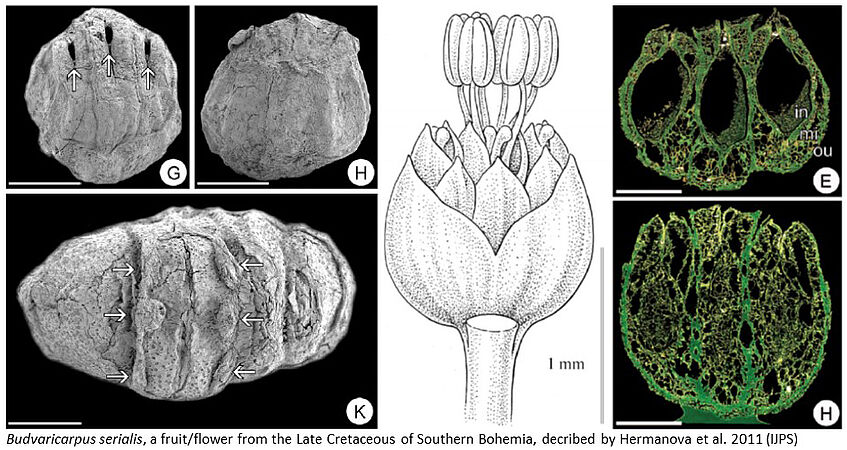
The Cretaceous fossil record is crucial for our understanding of angiosperm diversification. Together with paleobotanists from Prague, we have recently collected Late Cretaceous sediments (ca. 90 million year old) from Southern Bohemia containing numerous charcoalified angiosperm fossils (mostly tiny fruits and seed). The goals of this specific research project will be (1) to extract fossils by sieving a sediment sample, (2) to sort and identify potentially interesting fossil fruits, and (3) to morphologically analyse and describe a small number of selected fossils. Methods will involve Scanning Electron Microscopy and High Resolution X-Ray Computed Tomography. The project has the potential to be extended into a master thesis.
Supervisors: Jürg Schönenberger & Maria von Balthazar
Palynology in practice
Are you interested in pollen? In collaboration we will find an appropriate project where you can investigate pollen morphology with light- and scanning electron microscopy. This would be followed by training in describing pollen and illustrating your results. Subjects might include extant plant genera, honey, pollen on/inside insects, in situ pollen from fossil flowers, or dispersed palynofloras from the Cenozoic of Europe.
Supervisors: Friðgeir Grímsson

Environmental stress at the cellular level
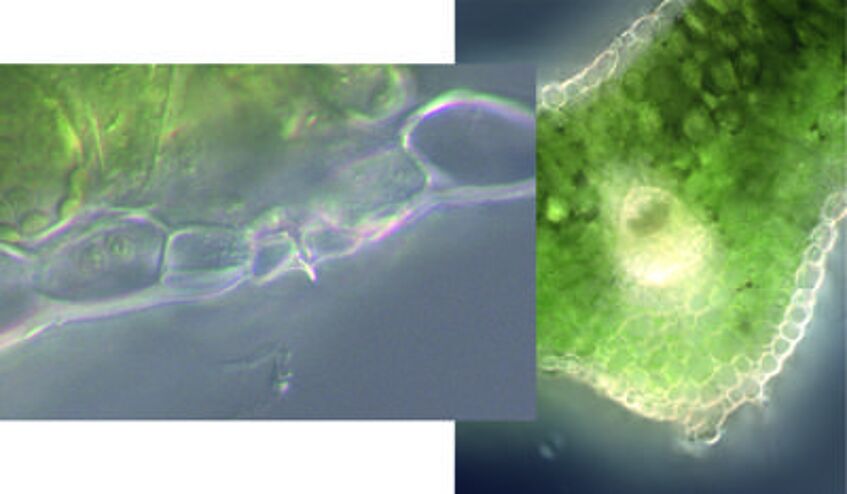
This research project is focussed on osmotic stress of plant cells. In order to visualize the shape of cells with and without turgor, different specific dyes will be tested. The anatomy of leaves in seed plants (cross sections) or in mosses will be studied using microscopy, cell biological methods or microtome sections.
Supervisor: Ingeborg Lang
Primula palinuri versus P. auricula: Do contrasting habitats and endemism influence chemical composition?tabolites (SPM) help out?
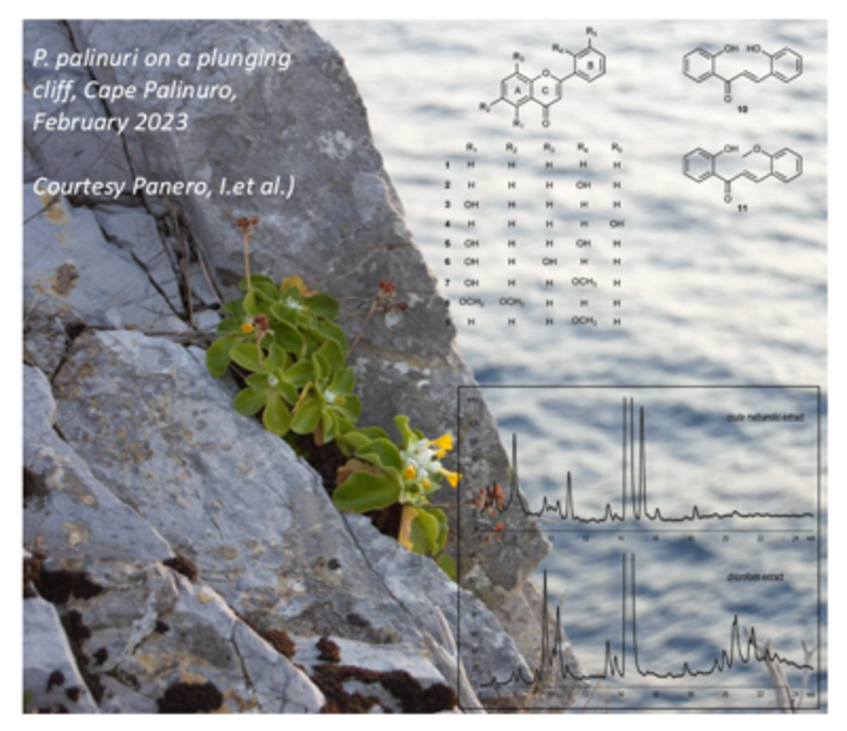
In previous studies, we tried to establish Primula auricula as an alpine model system, analyzing phytochemical diversity in relation to survival strategies under harsh conditions. Apart from the conspicuous farinose exudate and its strange flavonoid composition, sturdy rhizomes provide another asset for survival and for vegetative reproduction especially in rocky environments. We now want to extend our studies to the endemic P. palinuri, which is a close relative of P. auricula. It occurs often in coastal cliffs near the seaside, facing Mediterranean climate conditions and harsh winds from the seaside, which is quite a contrast to inland alpine Primulas. It is hardly distinguishable from P. auricula in morphological characters, particularly in habit, reproduction, and in the production of farina on aerial parts. The question now is if also the chemical characters are retained in this species that grows under quite different ecological circumstances compared to P. auricula. The aim of this project is to compare the chemical composition of above- and belowground organs from ex-situ cultivars of P. palinuri against published data of P. auricula. We will prepare respective extracts and subsequently apply chromatographic methods such as HPLC, to determine eventual differences by analyzing the chemical profiles using marker compounds from our database.
Supervisors: Johann Schinnerl & Karin Vetschera
Hidden diversity in one of the world’s most unique island floras
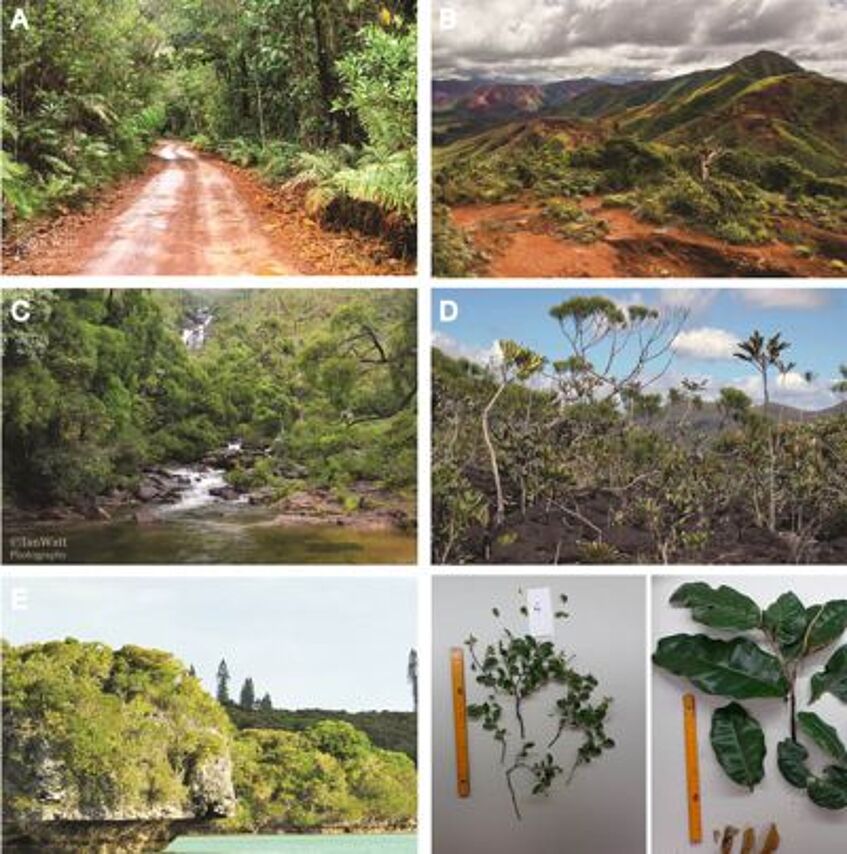
Do you want to discover how new species are recognized from genetic data and how hidden diversity comes to light? Join a project that investigates species boudaries, cryptic species, and hybridisation in the spectacular New Caledonian radiation of Diospyros (persimmons). The work will provide hands-on experience in evolutionary botany, applying whole genome data to species delimitation, admixture and hybrid detection. The project is ideal for students eager to sharpen their molecular systematics skills, while contribute to conservation and to a deeper understanding of how biodiversity evolves.
Supervisor: Ovidiu Paun
Evolution of repetitive DNAs in cultivated and wild chile peppers (Capsicum, Solanaceae)
Chiles (Capsicum spp., Solanaceae) are well-known vegetables and spices consumed worldwide. Most cultivated varieties belong to three species, but the genus includes over 40 wild species native to Central-South America. Repetitive DNA is an important and often dominant component of most plant genomes. This project aims to analyse the abundance, chromosomal distribution and the evolutionary dynamics of newly identified selected satellite DNAs (tandem repeats) in cultivated and wild pepper species. The repeats will be mapped in chromosomes via fluorescence in situ hybridization (FISH) and the data analysed using fluorescence microscopy. The data will be interpreted in a phylogenetic context and implemented with basic NGS sequence data analyses (user friendly) to provide new insights into the evolution of chile genomes. Mapping of the novel satellite DNAs will also provide chromosomal markers to aid individual chromosome identification.
Supervisor: Hanna Schneeweiss

Epigenetic variation along Alpine altitudinal gradients and its link to climate warming
Climate change and extreme episodes of environmental stresses, notably heat and drought waves, have major consequences on ecosystems and biodiversity. Short-term mechanisms of plant responses included in phenotypic plasticity may contribute to successful persistence under such environmental constraints. This project will survey DNA methylation variation in natural plant populations to search for variants that can be associated with adaptive phenotypes along altitudinal gradients. The student will mainly be involved in DNA extractions and NGS library preparation for DNA methylation analyses, and could also include some data processing. The knowledge gained will be integrated with ecological information and with already quantified epigenetic and transcriptomic responses to simulated climate warming to improve our understanding of the extent and of the limits of plant responses to climate change in alpine settings and beyond.
Supervisor: Ovidiu Paun